

Welcome
Hello, everyone, and welcome to the first post here on type2foodie!
I’m starting off with a regular series: my favorite things. These are ingredients and tools that I rely on frequently to make cooking and baking more enjoyable!
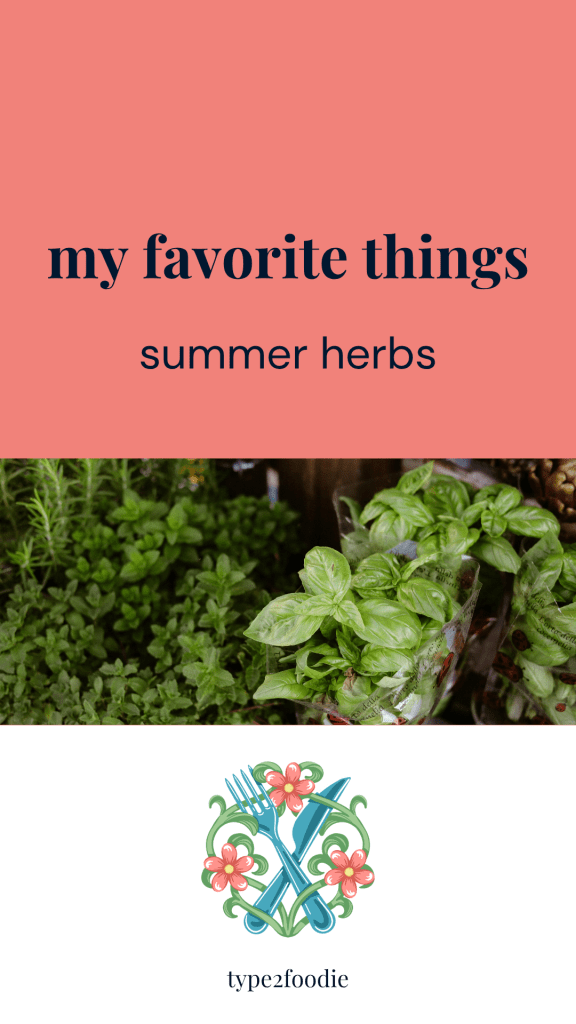
My favorite things: Summer herbs
I love gardening and I love herbs, so summer is the perfect time of year to highlight all of the abundance you can find. Herbs help to flavor a dish and often add complex layers that makes eating delightful. You can play around with different combinations of herbs to discover what you like the best!
Here are five of my favorite summer herbs to use in savory cooking, with some ideas for incorporating them into your meals! There are many others, though—for instance, I often perk up a simple storebought salad mix by mixing in thinly sliced fresh herbs, like basil, dill, and mint.
basil
Basil is one of the most familiar herbs to many western cooks, often featured in Italian, Greek, and other Mediterranean recipes. But it also has a place in Asian cooking, especially Thai and Vietnamese recipes.
Basil is a versatile herb with a bright flavor that really screams summer to me. Basil is classified as a tender herb, which means that it’s best used right off the plant without much heat applied. Slice it finely and add it at the end of cooking, or make a no-cook sauce to dollop on a dish.
Try basil in:
- tomato mozzarella salad
- Thai tofu stir fry (cut the brown sugar in the sauce or leave out entirely)
- Georgian chicken stew (substitute some of the cilantro with basil)
- chicken thighs with tomato basil sauce
cilantro
Cilantro is another incredibly versatile herb that is often used in Mexican, Tex-Mex, and Asian cuisine. While some people don’t enjoy the flavor, I’m fortunate enough to not be one of them! We love cilantro in our house, and when I grow it, I always try to let some of the plants go to seed—the dry seeds of the cilantro plant are known as coriander and add fantastic flavor to curry sauce, chicken, and many other recipes.
Try cilantro in:
dill
Dill adds a unique flavor to many dishes—it’s especially popular in Eastern European and Mediterranean cooking—and it’s one of my favorites! It pairs especially well with chicken, fish, and almost every vegetable I can think of.
A note if you try growing dill: it’s a popular food for Eastern Black Swallowtail caterpillars, which means that sometimes your beautiful, healthy plant will disappear overnight.
Try dill in:
- spring chicken salad
- Polish cucumber salad
- lemon garlic dill salmon
- onion dill muffins (or use your favorite savory muffin recipe)
mint
Mint is a familiar and beloved herb for many, but its uses go far beyond a cup of tea or a chocolate dessert! Like basil and cilantro, mint is a tender herb, so I tend to use it raw to add a pop of flavor and color to a finished dish. You can add also use mint in addition to or instead of basil in many recipes.
Try mint in:
- marinated zucchini
- carrot salad with feta & mint
- pollo a la brasa
- Greek lamb burgers with spinach & red onion
oregano
Oregano is a great summer herb, popular in cuisine from Greek to Mexican. It can hold up to a little more cooking than the more tender herbs in this list, which makes it a great option to add flavor to grilled meat or vegetables. Combined with lemon, garlic, salt, and olive oil, oregano makes a great simple salad dressing as well!
Try oregano in:
- cucumber tomato salad (use fresh instead of dried)
- skillet turkey chili
- pickled eggplant
- jackfruit tinga tacos
A note on budgets
Unfortunately, fresh herbs at most grocery stores tend to be incredibly expensive for very small amounts. While it’s not feasible for most of us to grow all of our own food, herbs are something that I do recommend trying to grow if at all possible—even in a container or indoor garden.
If this truly isn’t possible, here are a few ideas for stretching those tiny sprigs a little farther:
- Bulk up the amount listed in the recipe with cheaper herbs like parsley, cilantro, or green onion, with the more pungent herbs as an accent flavor
- Look for herbs when they’re on sale or marked down and then freeze or oven-dry them to use later
- Use every bit you can—stems of tender herbs like dill or basil can be turned into sauces like pesto or chimichurri, while woodier stems like thyme or oregano can be saved to flavor beans or broths.
- Ask a gardener friend if they have extra herbs (chances are, they do)
- If you’re lucky enough to live near an international grocery store, check the produce section, especially for herbs like basil, cilantro, green onion, or ginger
- Look for herb pastes at the grocery store—while still expensive, they’re already processed and will last longer than fresh herbs.






Leave a Reply